Quinceañera Traditions Explained: A Complete Guide for Families
A quinceañera is one of the most meaningful celebrations in Latin culture — a young woman's formal introduction to society as she turns 15. If you're planning your first quinceañera and aren't sure what all the traditions mean or in what order they happen, this guide explains everything clearly.
What a Quinceañera Means
A quinceañera (from "quince años" — fifteen years) marks a girl's transition from childhood to young womanhood. The celebration has roots in pre-Columbian indigenous traditions and Spanish colonial influence, combining into the ceremony practiced today across Latin America and the United States.
The celebration typically has two parts: a Catholic Mass (misa de quinceañera) and a reception (fiesta). Not all families include the religious ceremony — it depends on the family's traditions and preferences.
The Ceremony Elements
The Crown (La Corona)
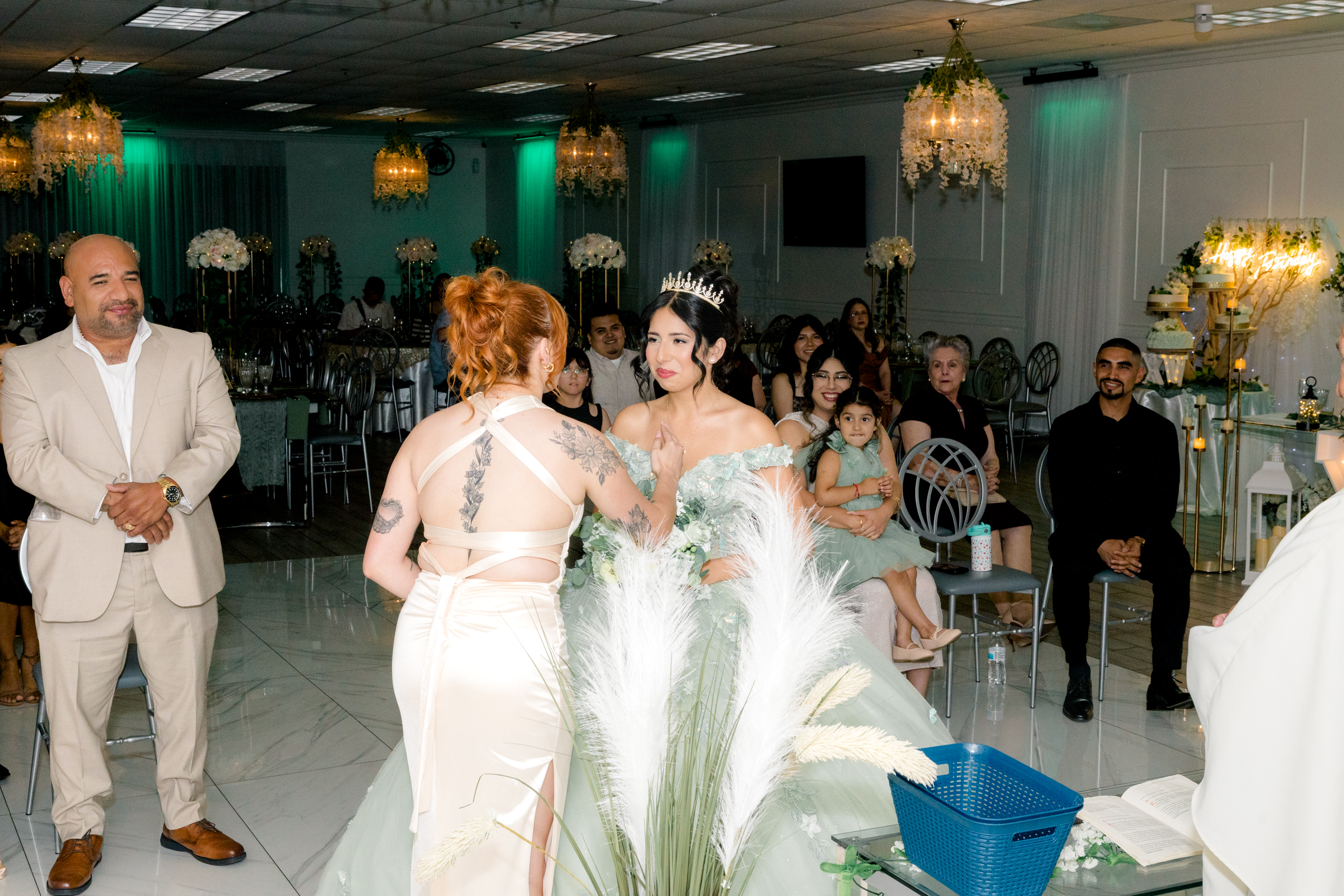
One of the first symbolic acts: the honoree's tiara or crown is placed on her head, symbolizing her new maturity. This is often done by her mother, godmother, or father.
The Last Doll (La Última Muñeca)
A doll is presented to the quinceañera, symbolizing the last toy of childhood that she now leaves behind. Some families skip this tradition; others make it an emotional highlight of the evening.
The Change of Shoes (El Cambio de Zapatos)
The father or a padrino removes the quinceañera's flat shoes and replaces them with heels — symbolizing her transition to womanhood.
Reception Traditions
The Grand Entrance
The quinceañera enters the ballroom with her chambelanes and court of honor, typically choreographed to a specific song. The timing, lighting, and music are all rehearsed in advance with the DJ and coordinator.
The Vals (Waltz)
The formal waltz is the emotional centerpiece of the evening. The quinceañera dances first with her father, then with her chambelán de honor, and then with the full court. The song choice is deeply personal — many families have a song they've chosen for years.
The Baile Sorpresa (Surprise Dance)
The surprise dance is a choreographed performance — often a modern pop song with a dramatic transition — that the chambelanes and quinceañera have rehearsed in secret. It's one of the most anticipated moments of the night.
The Hora Loca
After dinner, the energy shifts to pure celebration. Props are distributed, the DJ goes full party mode, and the dance floor fills up. Some families hire performers for this section.
Planning Your Quinceañera in the Inland Empire?
Our team at Vive Banquet Hall has coordinated hundreds of quinceañeras — including every tradition on this list. Schedule a free tour to see the space and meet the team.
Roles: Chambelanes and Court of Honor
The chambelanes are the young men who escort the quinceañera. The chambelán de honor is the primary escort, usually her closest male companion or a family member. The court of honor (chambelanas) are the young women who accompany her.
Court sizes vary: 7, 14, or 15 chambelanes/chambelanas is traditional. Larger courts make for more dramatic entrances; smaller courts are easier to coordinate and rehearse.
The Padrino/Madrina System
Padrinos and madrinas are sponsors — family friends or relatives who contribute specific items to the celebration. Common padrinos include: the cake, the DJ, the flowers, the tiara, the shoes, the video, and the photography.
The padrino system is a beautiful way to involve the community in the celebration, but it adds coordination complexity. Make sure all padrino commitments are confirmed in writing well in advance.
Modern vs. Traditional Quinceañeras
Every family interprets these traditions differently. Some families skip the religious ceremony entirely and focus on the reception. Others maintain every traditional element. Modern quinceañeras often add: 360 photo booths, glitter cannons, hora loca performers, themed décor, and social media moments built into the program.
The important thing is that the celebration reflects your family's values and your daughter's personality — not a template from the internet.
Frequently Asked Questions
The first dance is called the vals (waltz). Traditionally, the quinceañera dances a formal waltz with her chambelán de honor or father. Many modern quinceañeras add a surprise dance (baile sorpresa) with the chambelanes.
Hora loca (crazy hour) is a high-energy celebration typically happening after dinner. Props, masks, hats, and confetti are distributed, the DJ shifts to upbeat music, and the energy peaks.
Padrinos are traditional but not required. They are typically sponsors who contribute specific items (the cake, the DJ, the shoes, the tiara). How many padrinos you have depends on your family culture and preferences.